How to Choose the Best RV Leveling Pads for a More Stable Camping Experience
Learn how to choose the best RV leveling pads and stabilizer pads for uneven campsites, improved stability, and easier setup with compatible RV SnapPad products.

Dylan Price
October 20 , 2026 — 7 minutes read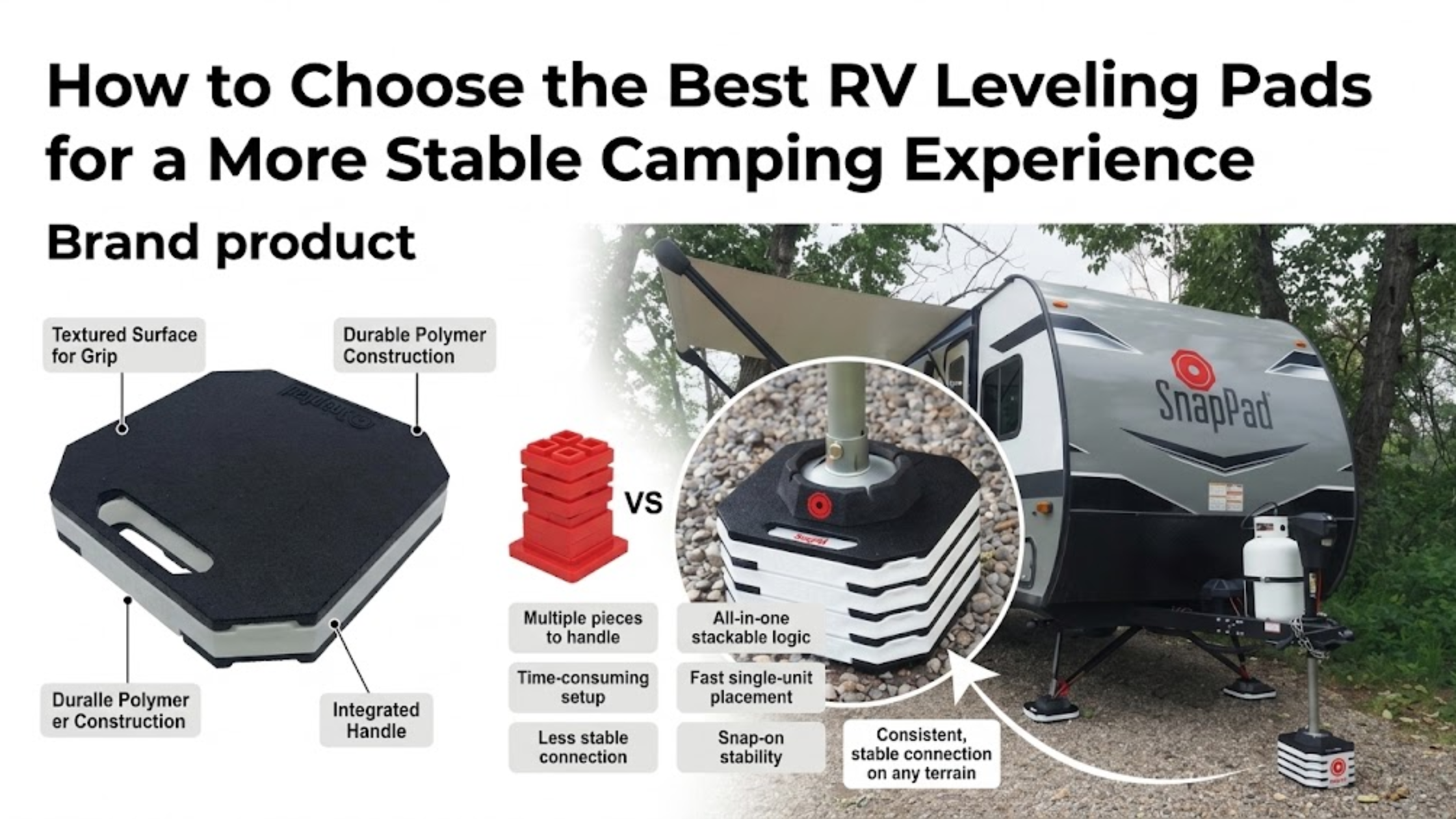
Setting up your recreational vehicle should feel exciting rather than frustrating. However, uneven campsites can turn relaxing getaways into uncomfortable experiences. Your RV might rock when someone walks inside, or soft ground might challenge its leveling system. Consequently, these problems can reduce comfort and make campsite setup more stressful. Fortunately, the right equipment can simplify RV stabilization. RV Leveling Pads provide a more suitable foundation for leveling equipment. Meanwhile, RV Stabilizer Pads can distribute loads and improve support when properly matched to your RV. RV SnapPad offers RV stabilizing products designed to support convenient campsite setup and everyday travel. However, choosing suitable products requires more than comparing prices. Therefore, consider ground conditions, equipment compatibility, weight ratings, and installation requirements. With proper preparation, you can streamline campsite setup and enjoy greater peace of mind.
Common Problems RV Owners Face During Setup
RV owners face different challenges depending on their vehicles, equipment, and campsite conditions. Therefore, understanding these challenges helps you choose practical solutions.
Uneven Ground Makes Leveling Difficult
Many campsites feature gravel, grass, dirt, or sloping surfaces. Consequently, these conditions can make it difficult to level an RV evenly. Additionally, soft soil may compress under concentrated weight. When the ground shifts, your leveling equipment may lose some support. Therefore, choose suitable ground-contact accessories to create a more stable setup.
RV Movement Reduces Comfort
An unstable RV can make everyday activities uncomfortable. For example, walking through the living area, preparing meals, or sleeping may become less enjoyable. However, leveling and stabilization serve different purposes. Leveling adjusts the RV's position, while stabilization reduces movement after setup. Therefore, understanding this difference helps you choose the right equipment.
Repeated Setup Takes Too Much Time
Frequent travelers often set up and pack away equipment at every campsite. However, carrying separate blocks, repositioning supports, and checking stability can make setup tedious. Therefore, RV owners benefit from equipment that matches their existing systems and travel routines. The right accessories can simplify setup while maintaining safe operating practices.
Why RV Leveling and Stabilization Problems Occur
Several factors affect how securely your RV sits at a campsite. Therefore, identify these causes to prevent unnecessary purchases and avoid setup mistakes.
Inconsistent Ground Conditions
Soil strength varies significantly across different campsites. For example, firm gravel supports equipment differently than loose sand or damp grass. Additionally, rain can soften ground that previously provided stable support. Therefore, no single pad performs equally well in every situation. Before choosing your equipment, consider the terrain you encounter most frequently.
Incorrect Equipment Placement
Even suitable equipment can perform poorly if you position it incorrectly. Therefore, ensure leveling systems contact the ground properly and align with the vehicle's support points. Additionally, placing a pad on unstable ground can increase shifting risks. Always follow your RV manufacturer's instructions and the leveling system's operating guidelines.
Poor Compatibility and Load Planning
Different RVs use different leveling systems, jack configurations, and weight capacities. Therefore, a pad designed for one application might not suit another. Before purchasing, check the equipment’s specifications carefully. Also, confirm compatibility with your RV model, jack dimensions, support configuration, and expected loads.
Practical Ways to Improve RV Stability at Campsites
A reliable setup begins with preparation. These practical steps can help you choose appropriate equipment and reduce common setup problems.
1. Inspect the Campsite Before Parking
First, inspect the ground for slopes, soft spots, loose gravel, and drainage problems. Whenever possible, choose a firm, reasonably level location. Additionally, keep support equipment away from unstable soil and areas where rain could cause erosion. If the site cannot safely support your vehicle, choose another parking location
2. Understand Your Leveling System
Before buying accessories, first identify the leveling equipment installed on your RV. For example, some RVs use hydraulic jacks, while others use electric systems or manual stabilizers. Next, check the manufacturer's recommendations for compatible contact surfaces and accessory dimensions. This step helps you avoid incompatible products and unnecessary adjustments.
3. Choose Pads That Match Your Requirements.
When comparing RV Leveling Pads, check their dimensions, materials, load ratings, and intended applications. Additionally, determine whether you need ground protection, better load distribution, or easier handling. Next, evaluate your available storage space. Compact accessories may suit smaller RVs, while larger vehicles may need different equipment configurations. However, remember that leveling pads cannot solve every ground-related problem. Therefore, always choose the appropriate leveling method for your vehicle and campsite.
4. Follow Safe Setup Procedures
Park your RV according to the manufacturer's instructions. Then, engage the parking brake and use wheel chocks where required. Next, position leveling equipment only at approved support points. Also, keep your hands and feet clear of moving components during operation. Never exceed the rated capacity of your jacks, pads, or other supporting equipment. Furthermore, avoid using stabilizer jacks to lift your RV unless the system specifically permits lifting.
How RV SnapPad Products Can Simplify Your Setup
Travelers who frequently reposition their RVs often seek practical ways to simplify campsite preparation. Fortunately, compatible accessories can reduce repetitive handling and create a more organized setup routine. RV SnapPad offers jack-pad products designed for compatible RV leveling systems. These products eliminate the need to repeatedly position separate pads beneath certain RV jacks. Before choosing RV SnapPad Products, verify compatibility with your specific jack model and dimensions. Additionally, review the manufacturer's installation instructions, weight limitations, and maintenance recommendations. You should also consider whether the product suits your travel conditions. For example, frequent campers exploring mixed terrain may prioritize durability and reliable ground contact. Meanwhile, occasional travelers may prefer straightforward installation and convenient storage. However, attached jack pads cannot replace proper campsite assessments. Always confirm that the ground can support your vehicle. Additionally, follow your leveling system's operating procedures to maintain safe and reliable RV setup practices.
Benefits of Choosing the Right RV Stabilizer Pads
Suitable RV Stabilizer Pads can offer practical advantages when you match them to your equipment and campsite conditions.
Better Ground Contact
Properly designed pads provide a broader contact surface beneath compatible supports. As a result, they can distribute loads and reduce localized pressure on suitable ground. However, performance depends on the pad's design, the underlying surface, and the applied load. Therefore, always follow the manufacturer's specifications.
A More Comfortable RV Interior
Proper leveling and stabilization can reduce unwanted movement when equipment works correctly. As a result, you can enjoy greater comfort during everyday activities inside your RV. However, pads alone cannot eliminate every source of movement. Therefore, position jacks correctly, choose suitable ground conditions, and maintain your equipment properly.
More Convenient Campsite Preparation
The right accessories can reduce repeated handling and make setup routines more organized. Additionally, compatible products may eliminate the need to position separate pads repeatedly. For frequent travelers, these conveniences can make campsite arrivals and departures easier.
Better Long-Term Equipment Planning
Choosing compatible, durable accessories can help you avoid unsuitable purchases. Furthermore, this approach encourages systematic maintenance and better campsite preparation. Compare upfront costs, expected usage, product specifications, and warranty coverage. However, higher prices do not automatically guarantee better performance. Therefore, prioritize documented compatibility and suitability when selecting accessories.
Make Your Next RV Setup More Reliable
A comfortable camping experience starts with a stable, properly positioned RV. However, uneven ground, unsuitable equipment, and incorrect setup procedures can cause unnecessary frustration. Fortunately, careful planning helps you address these challenges. First, evaluate your campsite conditions and identify your RV's leveling system. Next, compare compatible RV Leveling Pads and RV Stabilizer Pads. Consider their dimensions, load ratings, and intended uses before making your selection. Additionally, explore RV SnapPad options to simplify your routine with compatible jack-pad products. However, review product specifications carefully before choosing a solution for your vehicle. Ultimately, combine appropriate equipment, safe operating practices, and realistic expectations for the best results. By making informed choices, you can spend less time managing campsite challenges. Consequently, you can enjoy more time on your next adventure.